

Negotiation isn’t the final act of selling; it’s the natural outcome of how you’ve positioned your value from the start. When salespeople rush into negotiations without clarity, structure, or confidence, they don’t just lose the deal; they lose the power dynamic.
Ask any sales professional where they lose the deal, and most will say, “During the negotiation.” But the truth is, most deals are lost long before that point.
This article is your masterclass in doing precisely that. You’ll learn how to negotiate in sales like a leader, protect your margins, and build relationships that turn one-time deals into lifelong clients.
By the end, you’ll walk away with actionable frameworks, real-world examples, and expert-backed negotiation tactics that will help you close more deals, without ever discounting your worth.
🎧 Want to hear this in action? Check out The Vault Unlocked Podcast, where Kayvon breaks down real negotiation scenarios with elite closers.
What Is Sales Negotiation (and Why It’s a Leadership Skill, Not a Sales Tactic)
Sales negotiation isn’t about trickery, pressure, or clever phrasing. It’s about alignment, helping both parties reach an agreement that creates mutual value. A great negotiator doesn’t “win” the conversation.
They lead it. They understand their customers’ psychology, anticipate objections, and stay rooted in value rather than desperation.
This is what separates top-performing sales pros from transactional closers.
In today’s economy, where buyers are more informed and less loyal, mastering the art of negotiation isn’t optional. It’s the skill that defines whether you’ll survive or scale.
The Mindset of a High-Value Negotiator
Before we get tactical, let’s talk about the foundation: the mindset. The difference between an average negotiator and a master is psychological.
Top performers approach negotiation with five core principles:
- They believe in the value they deliver: Confidence in your product or service is non-negotiable. If you hesitate on your worth, so will your prospect.
- They view objections as opportunities: Objections aren’t rejections; they’re requests for clarity. Great negotiators lean in, not back.
- They stay detached from the outcome: Pressure kills persuasion. When you remove desperation, you gain authority.
- They seek alignment, not dominance: The goal isn’t to win against your prospect, but to win with them.
- They prepare like professionals: every objection, competitor, and price question is anticipated, never improvised.
10 Proven Strategies for Negotiating Sales Without Losing Value
Let’s dive into the tactical side, the exact strategies elite sales consultants and high-ticket closers use to negotiate confidently, maintain control, and still close at full value.
1. Anchor the Value Early
If you don’t define your value early, the client will define it for you, and it’ll always be lower. Before talking numbers, focus on impact. What transformation does your product or service create? What’s the cost of inaction?
For example:
Instead of saying, “Our consulting service costs $20,000,” reframe it as, “Our clients typically see a 30% increase in revenue within the first 90 days. The investment is $20,000.”
That single shift reframes cost as return.
2. Use the “Three-Tier Value Ladder”
Give clients structured choice, not endless flexibility. Present three packages:
- Essential: Meets baseline needs.
- Pro: Offers premium benefits.
- Elite: All-inclusive, transformational results.
This framework gives buyers a sense of control while positioning your mid- or top-tier offer as the most logical choice.
As highlighted by Harvard Business Review, businesses that use a “Good-Better-Best” pricing model help customers make confident buying decisions — often leading them to choose higher-tier packages.
3. Lead with Questions, Not Defensiveness
When prospects push back on price, resist the urge to defend, get curious, and ask:
- “Can you share what specifically feels high about the price?”
- “What would make this feel like a no-brainer investment for you?”
- “Are we comparing this to something else you’ve used before?”
These questions uncover what they value most, allowing you to tailor your negotiation around that.
4. Never Negotiate Without Leverage
Leverage isn’t about manipulation; it’s about preparation. Top performers enter every negotiation armed with:
- Proof: case studies, testimonials, data.
- Positioning: clear differentiation from competitors.
- Purpose: the deeper mission behind the offer.
If you don’t have leverage, you’ll negotiate from weakness, not strength.
5. Create a “Value Stack” Before Revealing Price
Stack your value points: The results, tools, support, and long-term benefits, before mentioning price. For example:
“You’ll get full onboarding, lifetime access, quarterly strategy sessions, and performance tracking. The total investment is $10,000.”
When prospects hear everything they’re getting first, the price becomes a summary of value, not a standalone number.
6. Avoid Discounting, Trade Instead
When buyers ask for discounts, don’t say no, say “what if.”
“What if we adjust the timeline?”
“What if we remove X deliverable to meet that budget?”
“What if we add the Y value instead of cutting the price?”
This maintains your perceived worth and introduces flexibility without losing integrity. Discounts train clients to expect less value for less money. Trades reinforce value for value.
7. Understand the Decision Chain
In corporate or B2B deals, the person you’re negotiating with may not be the decision-maker. Map out the decision chain early. Ask:
- “Who else will be involved in final approval?”
- “What does your internal process look like once we align here?”
This helps you preempt objections from stakeholders you haven’t met yet, a mistake that kills many high-value deals.
8. Master the Silence
Silence is one of the most potent tools in negotiation. After stating your price or proposal, stop talking.
Most salespeople over-explain out of discomfort. Master's pause. That moment of silence often prompts the client to respond, but they frequently close themselves off.
9. Use Time as a Strategic Lever
Urgency done right creates commitment, not pressure. Set clear timelines tied to value:
“If we begin this quarter, you’ll see results by Q1; waiting will push that ROI back by six months.”
Deadlines should serve the client’s interest, not your quota.
10. Always De-brief After Every Negotiation
Win or lose, analyze every negotiation like a post-game review.
Ask yourself and your team:
- What went well?
- Where did the control shift?
- What objections caught us off guard?
This reflection builds mastery over time and turns every conversation into a lesson.
The 4 Pillars of Sales Negotiation Mastery
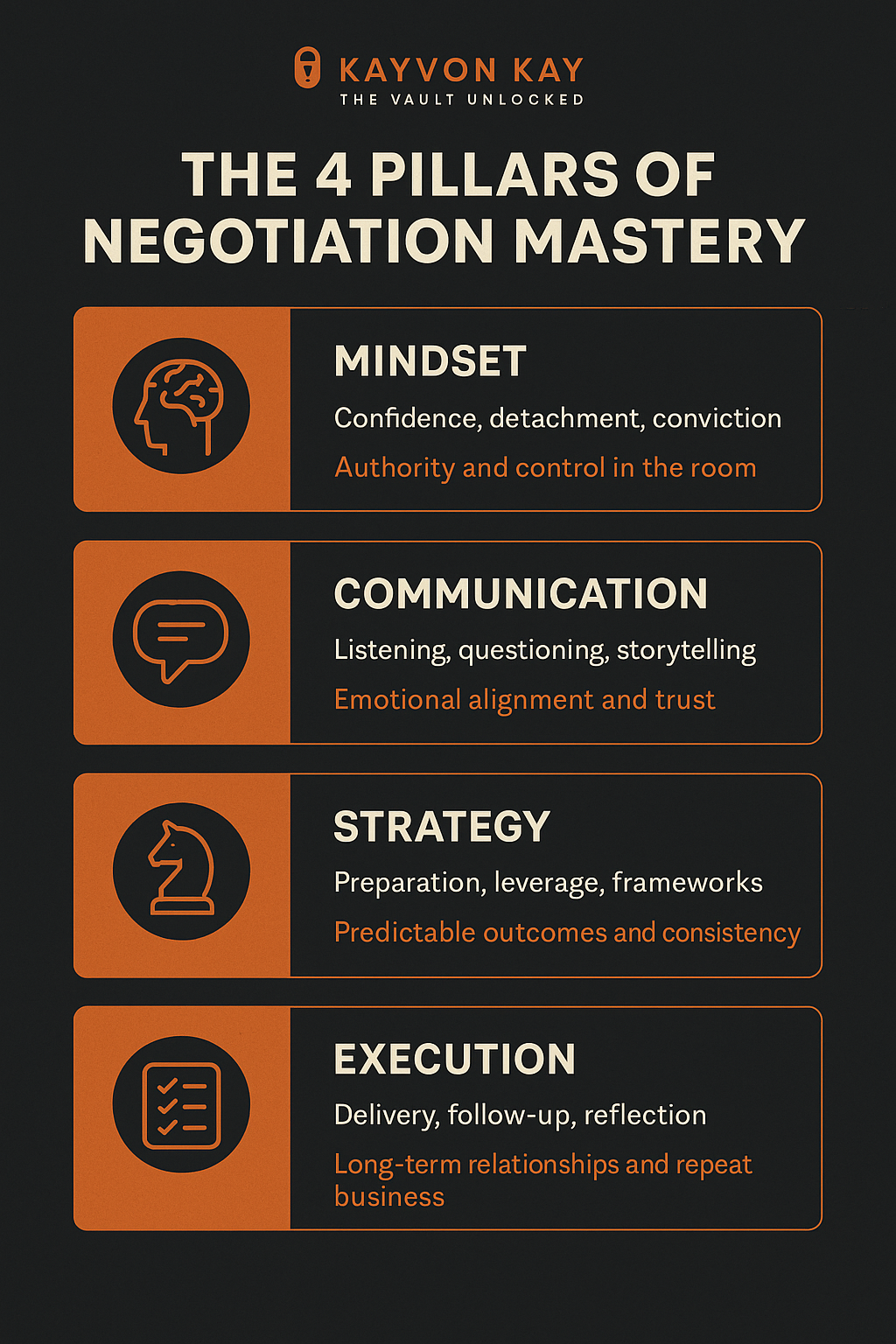
Great negotiators blend all four. When you master the balance between conviction and collaboration, you become unshakable.
Turning Price Pressure into Partnership
One of Kayvon’s clients, a B2B tech company, faced a tough challenge. Competitors undercut their pricing by 25%. Instead of matching, they redefined their offer.
They reframed their pitch around the total cost of ownership, highlighting:
- 40% faster implementation
- 2x longer product lifespan
- Dedicated client success team
As a result, they closed a multi-year deal above the competitor’s price point by anchoring the value, not the discount.
Common Sales Negotiation Mistakes to Avoid
Even experienced reps make these errors, and they cost deals every day.
- Leading with Price, Not Value: You instantly commoditize your offer.
- Negotiating Out of Desperation: Clients smell fear; confidence sells.
- Failing to Identify Decision-Makers: You waste time convincing people who can’t say yes.
- Talking Too Much: Over-explaining erodes authority.
- Skipping Post-Negotiation Reflection: Reps who don’t review, don’t improve.
The Role of Emotional Intelligence in Negotiation
Today’s buyers are data-rich but trust-poor.
Emotional intelligence (EQ) is your ultimate differentiator.
High-EQ negotiators:
- Mirror tone and pace to build rapport.
- Acknowledge emotions before solving logic.
- Use empathy to disarm defensiveness.
Research from the University of Gloucestershire found that sales professionals with higher emotional intelligence levels delivered stronger sales performance and deeper client relationships.
FAQs About Sales Negotiation
- How do I handle price objections without discounting?
Reframe around value and ask what specific outcome the client wants, and show how your solution achieves it better.
- What’s the best way to stay confident during tough negotiations?
Preparation. Confidence comes from certainty; know your data, value, and process.
- How can I negotiate remotely or over video?
Leverage visuals, maintain intense eye contact, and slow your pacing. Tools like Zoom and Gong can record sessions for review.
- Should I walk away from a deal?
Absolutely. Walking away from bad fits strengthens brand authority and often brings the client back later on your terms.
- How can leaders improve team negotiation skills?
Invest in structured enablement. Regular role-playing and coaching build instinct and confidence.
Negotiation Is Leadership in Action
Negotiation isn’t about pressure; it’s about presence. The best sales professionals don’t dominate; they direct. They create clarity, align interests, and move people to act, not through manipulation, but through mastery.
At The Vault Unlocked, Kayvon Kay teaches leaders that sales negotiation is where belief meets business. When you believe deeply in your value, you never have to defend your price again.
So the next time you step into a negotiation, remember: you’re not closing a deal, you’re opening a partnership.
Ready to master negotiation and close with confidence?
🎧Tune in to The Vault Unlocked Podcast, where Kayvon and industry leaders share the frameworks behind every successful deal.


